Review Article

바이오 에너지 산업 성장에 따른 원료 시장 변화

도현석1https://orcid.org/0009-0004-3013-770X, 문정현2,*https://orcid.org/0000-0002-1494-0728
Hyunseok Do1https://orcid.org/0009-0004-3013-770X, Jeong Hyun Moon2,*https://orcid.org/0000-0002-1494-0728
Author Information & Copyright
1건국대학교 축산학과
2카길애그리퓨리나 구매및배합관리부
1Department of Animal Science, Konkuk University, Seoul 05029, Korea
2Formulation Team, Cargill Agri Purina, Seongnam 13630, Korea
*Corresponding author: Jeong Hyun Moon Formulation Team, Cargill Agri Purina, Seongnam 13630, Korea, Tel: +82-31-710-6016, E-mail: jemoon@cargill.com

© Copyright 2026 Korean Society of Animal Science and Technology. This is an Open-Access article distributed under the terms of the Creative Commons Attribution Non-Commercial License (http://creativecommons.org/licenses/by-nc/4.0/) which permits unrestricted non-commercial use, distribution, and reproduction in any medium, provided the original work is properly cited.

Received: May 23, 2025; Revised: Feb 18, 2026; Accepted: Feb 19, 2026

Published Online: Jun 30, 2026

Abstract

Korea’s compound feed industry is highly dependent on imported ingredients, with approximately 90% of raw materials sourced from overseas. As the rise of the bioethanol industry in the 2000s, corn distillers dried grains with solubles (DDGS) – a byproduct of the bioethanol productions – have become an important ingredient in compound feed. Currently, Korea imports over 1 million tons of USA corn DDGS annually, which accounts for 5.2% of the ingredients used in compound feed. As interest in sustainable energy grows, especially in the developed countries, the biodiesel industry is emerging as an important change in the energy market. The biodiesel and renewable diesel industries are industries that create energy sources to replace diesel oil by utilizing animal fat and vegetable oil used in the traditional compound feed market. As a result, the prices of animal fat and vegetable oil are expected to rise, and the production of vegetable by-products are expected to rise due to increased demand for vegetable oil. It is very meaningful to analyze and predict the changes that changes in these other industries may have on the market for ingredients for compound feed. This is a time when attention is needed to predict changes in the ingredient market in advance and reflect them in design and formula preparation. The biodiesel and renewable industries create energy sources to replace diesel fuel by utilizing animal fat and vegetable oil, which are traditionally used in the compound feed market. Consequently, prices for animal fat and vegetable oil are expected to rise, and the production of vegetable byproducts is likely to increase due to the heightened demand for vegetable oil. Therefore, it is essential to analyze and predict how changes in the related industries may impact the market for compound feed ingredients. This paper emphasizes the importance of anticipating ingredient market changes and adjusting feed design accordingly to ensure sustainability and economic efficiency in the compound feed industry.

Keywords: Biofuel; Compound feed; Corn distillers dried grains with solubles; Feed industry; Ingredient

서 론

국내 배합사료 산업은 2023년 기준으로 총 89개의 법인이 소유한 126개 공장에서 연간 2,151만 톤의 배합사료(compound feed)를 생산하고 있다. 이를 통해, 양질의 사료를 공급함으로써 국민들에게 안전하고 고품질의 동물성 단백질을 제공하는 중요한 공급망의 출발점을 차지하고 있다. 국내 배합사료의 가장 큰 특징은 원료의 수입 의존도가 높다는 점이다. 2023년 사용량 기준으로 약 80.6%의 원료를 해외에서 수입하여 사용 중에 있다(Table 1). 국내산 원료로 평가되는 일부 옥수수 가공 부산물 및 대두박도 해외에서 수입되는 옥수수와 대두를 기반으로 생산되는 부산물이라는 점을 고려할 때, 실질적인 수입 원료가 국내 배합사료 생산을 위한 원료 사용량에서 차지하는 비중은 90%에 이른다. 이러한 특징으로 인하여 한국 배합사료 및 축산업 시장은 원료시장의 변화의 영향을 많이 받는다는 구조적 특징을 가지고 있다[1,2].

Table 1. Raw material utilization for compound feed production in the Korea
Item (1,000 ton) KFA member companies Nonghyup and others Total
Domestic Imported Total Domestic Imported Total Domestic Imported Total
Cereal grain 171 8,172 8,343 90 3,211 3,301 261 11,383 11,644
Bran and hull 523 390 913 582 461 1,043 1,105 851 1,956
Animal protein source 192 10 202 11 0 11 203 10 213
Plant protein source 746 3,021 3,767 176 1,554 1,730 922 4,575 5,497
Plant fiber source 1 34 35 28 44 72 29 78 107
Animal-derived mineral 5 1 6 1 0 1 6 1 7
Mineral source 527 41 568 239 13 252 766 54 820
Processed by-product 108 206 314 65 116 181 173 322 495
Feed additive 150 44 194 70 8 78 220 52 272
Others 360 12 372 128 8 136 488 20 508
Sum 2,783 11,931 14,714 1,390 5,415 6,805 4,173 17,346 21,519

Data were obtained from a publication of the Korea Feed Association in 2024, based on 2023 statistics.

KFA, Korea Feed Association.

Download Excel Table

최근 국제 곡물 시장의 수급 불안정으로 옥수수와 대두박 등 핵심 사료 원료의 도입 단가가 지속적으로 상승함에 따라[1,2], 사료비를 절감하고 기존 사료 원료에 대한 의존도를 낮추기 위해 곡류 부산물을 포함한 대체 사료 원료의 활용이 큰 주목을 받고 있다[2]. 바이오 에탄올 시장의 성장으로 주정박(dried distiller’s grains with solubles, DDGS)의 생산량이 증가하면서, DDGS의 사료적 활용가치가 더욱 부각되고 있다[3]. 특히, 옥수수 DDGS의 경우, 과거 20년 동안 폭발적으로 생산량이 증가하였으며, 한국에서도 연간 100만 톤의 미국산 옥수수 DDGS를 수입하여 주요 원료로 사용 중이다. 앞으로의 원료시장이 변화되어가는 과정에 대해서 이해하고 그에 맞춰 배합비의 방향성을 설정하는 것은 결국 배합사료 산업 및 축산업에서 지속적으로 경쟁력을 확보하고, 안정적인 축산물을 국민들에게 공급할 수 있는 중대한 의미를 갖는다고 볼 수 있다. 이에 본 총설에서는 바이오 에탄올 및 바이오 디젤 산업의 성장에 따른 원료 시장의 변화를 정리하고, 옥수수 DDGS의 공급 확대가 사료용 원료의 수급 및 활용 구조에 미친 영향을 논의하고자 한다.

바이오 에탄올 시장의 성장과 원료사용 변화

바이오 에탄올 시장의 성장과 옥수수 주정박의 사료화

바이오 에탄올에 대한 관심은 오랜 역사를 가지고 있다. 제 2차 세계 대전 당시 석유 의존도를 줄이기 위한 방안으로 폭넓게 검토되었으며, 1970년대 석유 파동을 겪으면서 본격적인 정책적 방향성의 일환으로 미국과 브라질 등에서 적극적으로 바이오 에탄올 사업이 태동하게 된다. 특히 2000년대에 들어서면서 미국을 중심으로 재생에너지를 통한 화석에너지 대체에 대한 관심이 높아졌다. 이에 따라 옥수수, 소맥 및 보리와 같은 전분이 풍부한 원료를 발효하여 에탄올을 생산하고, 남는 부산물인 DDGS를 가축용 사료로 활용하는 방안이 폭넓게 연구되어 왔다[4].

옥수수 DDGS는 에탄올 생산 과정에서 생성되는 발효 부산물로, 전분이 제거되고 단백질과 섬유가 농축된 원료사료로 높은 영양학적 가치를 지닌다. 옥수수 DDGS는 원물 기준 평균 31.4%의 조단백질(27.3% to 45.4%), 7.0%의 조지방(3.5% to 10.4%), 34.5%의 중성세제불용성섬유(30.5% to 41.9%) 및 4,950 kcal/kg의 총에너지(4,710 to 5,173 kcal/kg)로 구성되어 에너지 및 단백질 원료로서 가치가 높다(Table 2; [5]). 또한, 발효 공정은 원료사료의 항영양인자 감소 및 소화율 개선을 통해 영양학적 가치를 향상시켜 줄 수 있다고 보고되고 있다[6]. 이러한 영양학적 특성으로 옥수수 DDGS는 전통적인 에너지원인 옥수수와 단백질 공급원인 대두박에 비해 높은 가격의 원료 사료를 부분적으로 대체할 수 있는 원료로 알려져 있다[7].

Table 2. Nutritional compositions of corn dried distiller’s grains (DDG) with solubles (DDGS) reported in the NRC
Item (as-is basis) DM (%) GE (kcal/kg) CP (%) EE (%) NDF (%)
Corn DDG 90.8 4,919 28.9 8.7 41.9
Corn DDGS > 10 % oil 89.3 4,849 27.3 10.4 32.5
Corn DDGS > 6 and < 9 % oil 89.4 4,710 27.4 8.9 30.5
Corn DDGS < 4 % oil 89.3 5,098 27.9 3.6 33.8
Corn high protein DDG 91.2 5,173 45.4 3.5 33.6

NRC, National Research Council; DM, dry matter; GE; gross energy; CP, crude protein; EE, ether extract; NDF, neutral detergent fiber.

Download Excel Table

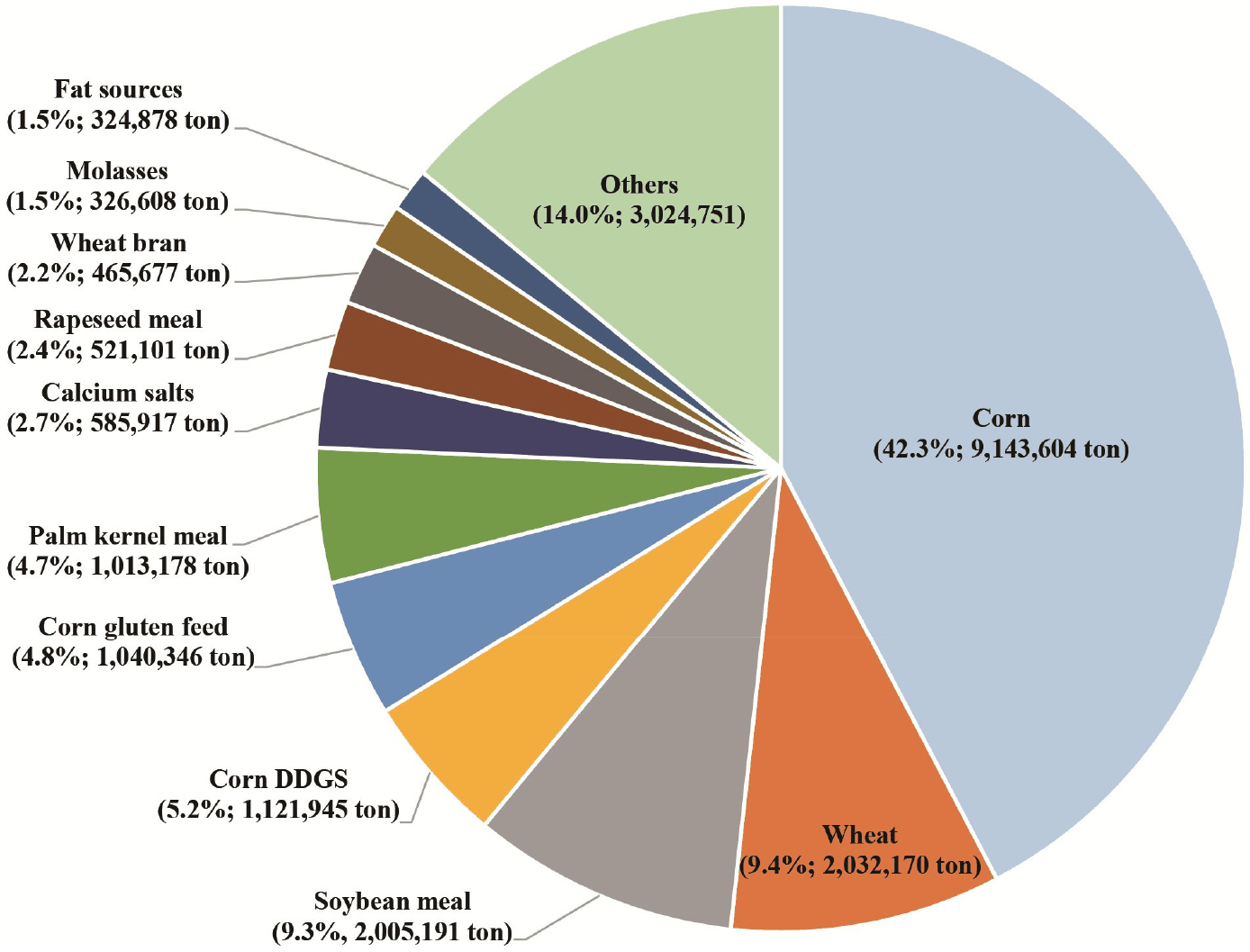
한국의 경우 사료용 곡물류 및 부존 자원이 부족하기 때문에 옥수수 DDGS를 새로운 원료로 적극 검토하여 사용량을 점진적으로 증가시켜왔다. 초기 미국산 옥수수 DDGS는 생산업체별로 설비의 수준도 다르고 생산 방식도 달라서 품질의 변이가 매우 컸다[8,9]. 따라서 배합사료 시장에서 미국산 옥수수 DDGS는 품질 변이의 이슈로 빠르게 접목되는데 한계가 있었다. 하지만 에탄올 산업이 지속적으로 성장하면서 공장 설비들이 대형화되고, 생산 프로세스들이 향상되면서 이제는 상당히 균일한 품질의 옥수수 DDGS가 생산되고 있다[10,11]. 한국에서는 2012년 약 46만 톤의 옥수수 DDGS가 수입되었으며, 2023년에는 112만 톤으로 2배 가까이 사용량이 증가하였다(Table 3). 옥수수 DDGS는 사료작물 자원이 부족한 한국에서 옥수수 및 대두박을 대체할 수 있는 원료로서 매우 가치 있게 활용되고 있다. 특히, 국내 배합사료 생산에 사용되는 전체 원료 중 약 5.2%를 차지하는 것으로 보고되어 주요 사료 원료 중 하나로 자리 잡고 있다(Fig. 1).

Table 3. Trend in U.S. corn distillers dried grains with solubles imports to Korea
Year Volume (ton) Price (1,000 dollar)
2012 468,586 150,143
2013 405,421 144,487
2014 653,394 196,069
2015 667,547 160,250
2016 862,498 184,708
2017 945,113 174,051
2018 1,096,294 245,331
2019 1,147,287 250,912
2020 1,127,894 250,632
2021 1,044,356 313,208
2022 1,134,022 392,120
2023 1,120,178 369,635

Data were obtained from the trade statistics database of the Korea Customs Service.
Download Excel Table
ait-13-1-15-g1
Fig. 1. The proportion (%) and usage (ton) of major feed ingredients used in compound feed in Korea. Corn accounted for 42.3% of total usage, followed by wheat (9.4%), soybean meal (9.3%), corn dried distillers grains with solubles (DDGS; 5.2%), corn gluten feed (4.8%), palm kernel meal (4.7%), calcium salts (2.7%), rapeseed meal (2.4%), wheat bran (2.2%), molasses (1.5%), and fat sources (1.5%). Other ingredients collectively represented 14%. Data were obtained from a publication by the Korea Feed Association in 2024, based on 2023 statistics.
Download Original Figure
미국산 옥수수 주정박의 사료적 가치

다양한 연구결과들을 종합해보면 옥수수 DDGS의 영양적 특징들은 축우 사료에서 동물의 생산성을 높이면서 경제적으로 사료를 구성하는 장점을 가지고 있다. 축우 사료에서는 약 20% 수준까지 옥수수 DDGS가 다른 원료들을 대체하여 사용될 수 있으며, 양돈 및 가금 사료에서는 각각 약 10% 및 5%가 배합사료에서 사용되는 것으로 보고되고 있다[7]. 한국 시장에서는 연간 약 100만 톤 정도의 미국산 옥수수 DDGS가 수입되어 사용되고 있으며, 축종을 구분하지 않았을 경우 평균적으로 약 5% 수준의 옥수수 및 대두박을 대체하고 있는 것으로 추정된다. 그러나 이러한 영양학적 장점들에도 불구하고, 옥수수 DDGS는 동일한 공장의 제품이라고 하더라도 원료가 되는 옥수수의 수확 시기 및 제조 시기에 따라 품질이 상이하다는 한계를 가진다. 이는 에탄올 공장에서 사용된 옥수수 자체의 영양소 함량 차이뿐만 아니라, 옥수수의 고형물 의 첨가 비율, 건조 시간 및 온도 등의 공정 조건 차이에 기인하는 것으로 알려져 있다[9]. 또한 공정 특성상 옥수수의 영양소가 농축되는 과정에서 곰팡이 독소도 함께 농축될 가능성이 있어 주의가 요구된다[12]. 일반적으로 옥수수 대비 약 3배 수준으로 곰팡이 독소가 농축되는 것으로 보고되며, 특히 보미톡신(deoxynivalenol)과 푸모니신(fumonisin)은 미국산 옥수수 DDGS 사용 시 지속적인 모니터링이 필요한 주요 독소로 알려져 있다.

브라질 바이오 에탄올 시장의 성장과 브라질산 옥수수 주정박의 이용 가능성

브라질은 세계 2위의 바이오 에탄올 생산국가이다. 하지만 브라질의 바이오 에탄올 시장은 미국과 다르게 사탕수수를 기반으로 한 에탄올 생산이 중심을 이루고 있다. 하지만 최근 2모작으로 생산되는 옥수수의 수확량이 급증하면서 사탕수수 대신에 옥수수를 사용하여 에탄올을 만드는 공장들이 증가하고 있는 추세이다[13]. 브라질 국립 옥수수 에탄올 연합(União Nacional do Etanol de Milho[UNEM]) 데이터에 따르면 옥수수를 이용한 에탄올 생산은 2017/2018에 약 5억 리터에 불과했던 것이 2022/2023년에는 44억 리터로 8배로 성장했다. 그리고 옥수수 에탄올 생산은 지속적으로 증가하여 2028년에는 약 80억 리터의 바이오 에탄올이 옥수수로 생산될 것으로 전망하고 있다[14]. 한국 관세청 자료에 따르면 2023년 6월과 7월에 브라질산 옥수수 DDGS가 처음으로 한국에 입항하여 일부 사료업체를 중심으로 사용 경험을 가진 것으로 보인다. 그동안 브라질산 옥수수 DDGS는 브라질 내부시장에서 소비되고 일부 물량이 베트남 등 동남아시아 국가와 유럽에서 사용되어져 왔으며, 물량이 충분치 않아 동아시아로의 수출은 제한적이었다. 하지만 브라질 바이오 에탄올 시장에서 옥수수 이용비율이 높아지면서 앞으로 브라질산 옥수수 DDGS의 수출이 지속적으로 증가할 것으로 전망되고 있기 때문에 미국산 옥수수 DDGS에 이어 브라질산 옥수수 DDGS의 사료적 활용가치를 파악하고 준비한다면 배합사료에서 대체원료로 활용할 수 있는 좋은 기회가 될 것으로 생각된다.

브라질산 옥수수 주정박의 사료적 가치

브라질산 옥수수 DDGS에 대한 연구는 미국산 옥수수 DDGS에 비해 많이 이뤄지지 않았다. 2017년에 수행된 Corassa et al.[15]의 연구에서는 전분채취법 및 지시제법을 이용해 브라질산 옥수수 DDGS의 에너지 이용률을 평가했다. 이 연구에서 브라질산 옥수수 DDGS의 가소화 에너지(digestible energy, DE)는 각각 3,739 kcal/kg 및 3,401 kcal/kg(원물 기준)으로 나타났고, 대사에너지(metabolizable energy, ME)는 각각 3,691 kcal/kg와 3,213 kcal/kg(원물 기준)으로 나타났다. 이 수치는 NRC[5]에서 제시한 지방함량 6% 이상, 9% 미만의 옥수수 DDGS의 DE(3,582 kcal/kg) 및 ME(3,396 kcal/kg)과 연속성상에 있는 것으로 판단된다. Cargill(Wayzata, MN, USA)에서 분석한 데이터에 따르면, 미국산 옥수수 DDGS와 브라질산 옥수수 DDGS의 곰팡이 독소를 제외한 영양 성분에서 차이가 나타나지 않았다(Table 4). 다만, 미국산 옥수수와 브라질산 옥수수의 품종이 다르고 옥수수의 성분 구성에 차이가 있기 때문에 장기적으로 추가적인 샘플 확보를 통한 데이터 축적 및 동물 체내 영양소 이용률 평가에 대한 지속적인 평가가 필요할 것으로 사료된다.

Table 4. Comparison of the nutrient composition of corn dried distiller’s grains (DDGS) by country of origin (USA vs. Brazil)
Item1) USA Brazil Difference2)
Dry matter 88.9 90.0 −1.1
Crude protein 28.7 31.0 −2.3
Ether extract 6.8 6.3 0.5
Ash 4.6 5.3 −0.7
Neutral detergent fiber 27.0 29.3 −2.3
Acid detergent fiber 7.9 8.4 −0.5
Phosphorus 0.7 0.7 0.0
Sulfur 0.6 0.9 −0.3
Aflatoxin - - -
Ochratoxin A - - -
Fumonisin 612 456 156
Deoxynivalenol 1,836 - 1,836
T-2 toxin 36.4 2.0 34.4
Zearalenone 77.0 12.0 65.0

1) The data were analyzed by Cargill.

2) Difference = corn DDGS from USA–corn DDGS from Brazil.

Download Excel Table

바이오 디젤 시장의 성장과 원료사용 변화

바이오 에탄올 산업의 성장 이후, 주요 선진국들을 중심으로 기후변화 대응을 위한 탄소 저감 정책의 일환으로 바이오 디젤 사용을 의무화하는 국가들이 증가하고 있다. 바이오 디젤은 크게 fatty acid methyl ester(FAME) 기반의 1세대 바이오 디젤과 수소화를 통해 생산되는 재생 디젤로 구분된다(Table 5). 한국의 경우 「신에너지 및 재생에너지 개발·이용·보급 촉진법」에 근거하여 2030년까지 바이오 디젤 의무 사용 비율을 현행 3%에서 8%까지 확대하는 정책을 추진하고 있다. 바이오 디젤 산업에 주목해야 하는 이유는 바이오 디젤 및 재생 디젤의 주요 원료가 사료산업에서 활용되고 있는 동물성 유지 및 식물성 유지라는 점에 있다. 특히 선진국들이 재생 디젤 의무 사용 비율을 확대함에 따라 해당 원료에 대한 산업 간 수요 경쟁이 심화될 것으로 예상된다[16]. 이에 따라 사료산업에서 이용 가능한 동물성 및 식물성 유지의 가용 물량은 점진적으로 감소할 가능성이 있다. 따라서 각국의 바이오 디젤 정책 방향을 이해하고 향후 유지 시장의 변화를 예측하는 것은 사료산업의 경쟁력 확보 측면에서 중요한 과제가 될 것으로 판단된다.

Table 5. Definitions and characteristics of diesel and biofuels
Item Source Production process Characteristics
Fossil diesel Petroleu Conventional petroleum refining Produced through petroleum refining process
Bio diesel Vegetable oils and animal fats Esterification or transesterification First-generation biofuel
Produced mainly from energy crops
Relatively simple production process
Replace up to 20% of diesel in blends
Renewable diesel Vegetable oils or waste oils/fats Hydrotreating Second-generation biofuel
Chemically identical to petroleum diesel
Fully compatible with fossil diesel infrastructure and transport systems
Download Excel Table
Biodiesel (fatty acid methyl ester [FAME])

바이오 디젤은 석유 기반 경유의 대안으로, 식물성 기름이나 동물성 지방과 같은 재생 가능한 자원을 통해 생산된다. 화학적으로 바이오 디젤은 에스터 교환반응(transesterification)을 통해 긴 지방산 고리를 가진 단일 알킬 에스터 혼합물이다[17]. 바이오 디젤은 비방향족 식물성 기름과는 달리 경유와 매우 비슷한 연소 특징을 가지기 때문에[18], 현재 사용되는 대부분의 경유를 대체할 수 있다. 그러나 현재 기술 수준에서는 바이오 디젤의 생산 단가가 일반 경유보다 높다는 단점이 있으며, 기술적 제약으로 인해 품질이 좋지 않은 폐처리 기름 및 지방을 원료로 사용하는 것이 제한되어 있어 식용 식물성 기름과 동물성 지방에 의존해야 하는 한계가 있다[19].

Renewable diesel (hydrotreated vegetable oil [HVO])

친환경 디젤로 알려진 재생 디젤은 수소화 처리와 가스화, 열분해 및 기타 생화학·열화학 기술을 통해 생산되는 탄화수소이다. 바이오 디젤과는 달리 석유 디젤과 화학적 구조가 일치하여 석유 디젤과 혼합 보관, 수송 등의 이점이 매우 높은 대체 연료이며, 1세대 바이오 디젤과는 달리 불순물이 포함된 폐유 등을 활용하여 생산할 수 있다는 장점이 있다. 이런 장점들로 인해 미국 바이오 에탄올 다음으로 많이 소비되는 바이오 연료 중 하나이다[19]. 미국 재생 디젤 연료 및 기타 바이오 연료 플랜트 생산 능력 보고서에 따르면, 2023년 1월 1일 현재 미국은 12개 주에 17개의 재생 디젤 생산 시설을 운영하고 있으며, 총 생산 능력은 연간 약 30억 gallon(113억 리터, 한국의 약 1개월 석유 사용량에 해당)이다. 2022년 미국의 재생 디젤 생산량은 약 15억 gallon이었고, 수입 재생 디젤 3억 gallon을 포함하여 총 17억 gallon이 소비되었다.

재생 디젤과 사료산업

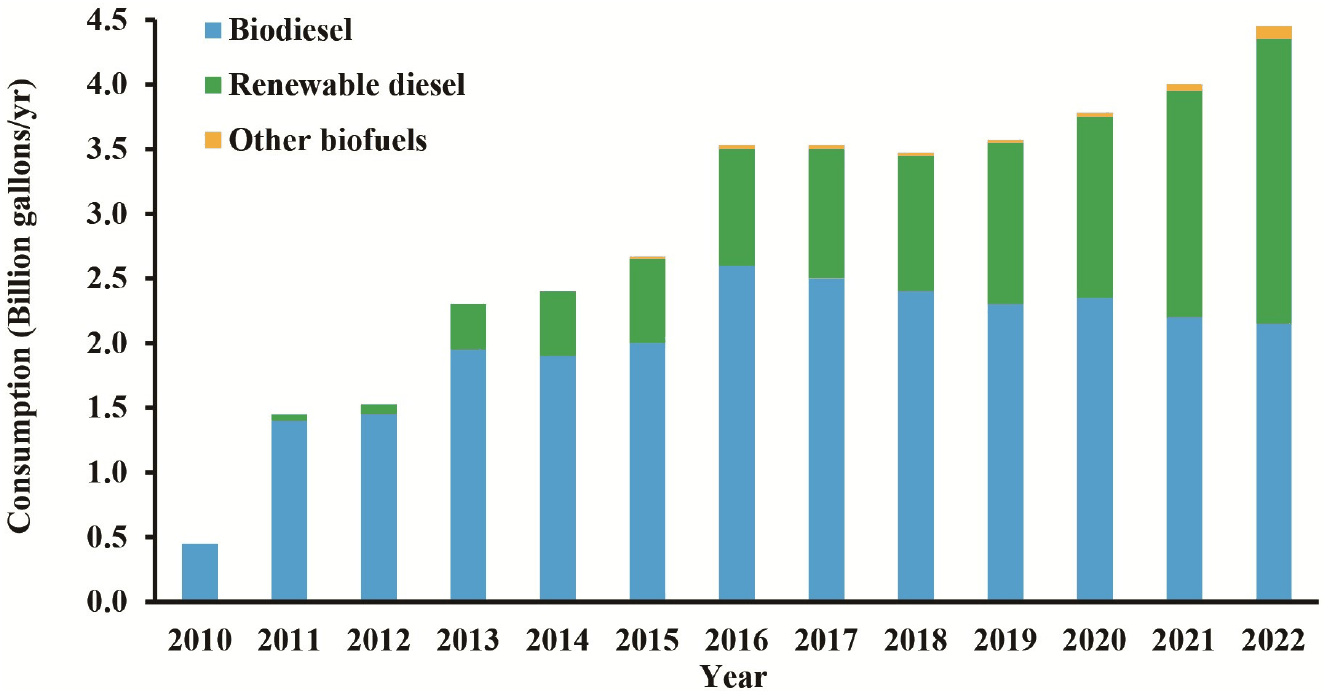
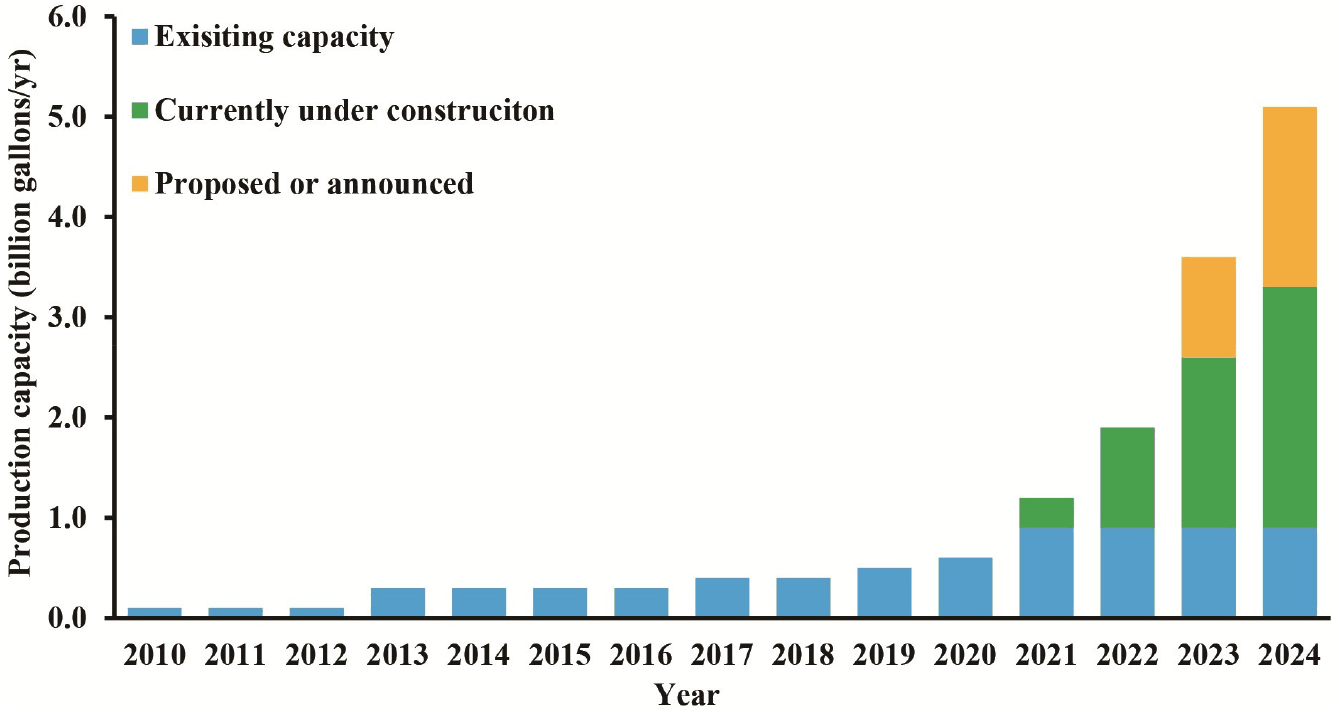
미국의 바이오 연료 사용은 바이오 에탄올에서 2세대 재생 디젤로의 이동으로 중심축이 변화하고 있다(Fig. 2; [20]). 이는 2세대 재생 디젤이 1세대 바이오 디젤보다 석유 디젤과 같은 방식으로 쉽게 다룰 수 있고, 원하는 비율로 혼합하여 사용할 수 있기 때문이다. 1세대 바이오 디젤은 석유 디젤보다 높은 온도에서 겔로 변하기 때문에, 저온 지역이나 겨울철에 사용하기 어려운 점이 재생상 디젤로의 전환을 촉진하는 계기가 되었다. 사료 산업의 관점에서도 재생 디젤에 사용되는 원료는 1세대와 동일하게 사료용으로 활용되는 식물성 기름과 동물성 지방이라는 점에서 특별한 차이가 없다. 따라서 각국의 정책 방향에 따라 지방 공급원들이 사료 시장보다는 재생 디젤 시장에 우선 배정될 가능성이 매우 높다. 특히, 항공유 시장에서 지속가능한 항공유의 의무사용 비율 이 증가함에 따라 추가적인 바이오 연료 사용이 촉진될 전망이다[19]. 이에 따라, 미국의 재생 에너지 생산 능력이 2024년까지 50억 gallon으로 현재 생산량의 1.5배 수준이 될 것으로 전망이다(Fig. 3; [21]). 재생 디젤 수요를 충족하기 위해 23개의 신규 대두 크러싱 공장이 건설 중이거나 기존 생산 능력을 확장하고 있으며, 이를 통해 대두 크러싱 능력이 약 34% 증가할 것으로 전망하고 있다. 선진국의 재생 디젤 수요 증가로 인해 식물성 기름 및 동물성 지방의 수요가 증가할 가능성이 크고, 이로 인해 국제 기름 가격이 상승할 것으로 보인다. 또한, 크러싱 공장 증설 등의 영향으로 향후 2년 내에 미국의 대두박 수출 여력이 대폭 확대되어 대두박 가격이 예년과 달리 약세장으로 전환될 가능성이 커지고 있다. 에너지 공급원으로 동물성 유지를 많이 사용하고 있는 한국의 배합사료 시장에서도 동물성 유지 및 식물성 지방이 더 이상 배합사료 시장에서 사용하기 어려운 상황이 올 수 있으므로 이에 대한 준비가 필요할 것으로 여겨진다. 긍정적인 변화로는 그동안 곡물류에 비해 가격 변동성이 컸던 대두박 시장이 재생 디젤 시장과 연계되어 가격이 하락하고 안정화되며 사용량이 증가할 것으로 기대해 볼 수 있다는 점이다[22]. 향후 5년 내에는 이러한 변화의 방향성을 제품 설계 및 배합비에 어떻게 반영할 것인지에 대한 연구가 필요하다.
ait-13-1-15-g2
Fig. 2. Consumption of biodiesel, renewable diesel, and other biofuels in the USA from 2010 to 2022. Biodiesel consumption increased until the mid-2010s, after which it stabilized. In contrast, renewable diesel consumption has risen rapidly after 2016. As a result, total biofuel consumption has increased in recent years, primarily due to the growth of renewable diesel.
Download Original Figure
ait-13-1-15-g3
Fig. 3. Existing and expected USA renewable diesel production capacity from 2010 to 2024. The production capacity for renewable diesel has grown rapidly after 2020. Total capacity, including facilities currently under construction or proposed, is expected to exceed 5 billion gallons per year by 2024.
Download Original Figure

결 론

한국의 배합사료 산업은 국내 사료자원의 한계로 인해 원료의 90% 이상을 수입에 의존하고 있으며, 식품 및 타 산업에서 발생하는 부산물 시장의 가변성에 직접적으로 노출되어 있다. 2000년부터 시작된 바이오 에탄올 산업의 발전으로 인해 부산물인 옥수수 DDGS가 동물 사료로서의 가치를 인정받고, 활발하게 사용될 수 있었다. 브라질의 바이오 에탄올 산업에서 옥수수 사용이 빠르게 증가하면서 브라질산 옥수수 DDGS의 사료적 가치를 빠르게 재평가하고 적용하는 과제가 우리 앞으로 다가왔다. 또한, 선진국을 중심으로 한 재생 디젤 의무화 정책은 사료용으로 사용되던 동물성 유지와 식물성 기름의 수요를 에너지 산업으로 빠르게 전이시키고 있으며, 이는 사료의 에너지원 부족과 동시에 단백질 공급 증가라는 시장의 불균형을 예고하고 있다. 따라서 이러한 변화들을 잘 이해하고, 배합사료 산업에 미치는 영향들을 고려하여 원료시장의 변화를 준비한다면, 지속가능한 경쟁력을 확보하면서 원료시장 변화에 맞는 대응책을 사전에 준비할 수 있을 것이다.

Competing interests

No potential conflict of interest relevant to this article was reported.

Funding sources

Not applicable.

Acknowledgements

Not applicable.

Availability of data and material

Upon reasonable request, the datasets of this study can be available from the corresponding author.

Authors’ contributions

Conceptualization: Moon JH.

Data curation: Do H, Moon JH.

Methodology: Moon JH.

Investigation: Do H, Moon JH.

Writing - original draft: Do H, Moon JH.

Writing - review & editing: Do H, Moon JH.

Ethics approval and consent to participate

This article does not require IRB/IACUC approval because there are no human and animal participants.

REFERENCES

1.

Oh HE, Song YS, Kim BG. Effects of supplemental xylanase and β-mannanase on in vitro disappearance of nutrients in feed ingredients for pigs. Anim Ind Technol. 2025; 12:185-92

2.

Pham TKT, Koh Y, An Y, Do DL, Kim SK, Kim BG. Replacement value of cashew nuts in swine diets. Anim Ind Technol. 2025; 12:177-84

3.

Lee WS, Jo H, Kim IH, Kim BG. Low-oil corn distillers dried grains with solubles can be fed to pigs up to 16.5% without compromising growth and pork quality. Anim Biosci. 2025; 38:993-1002

4.

Iram A, Cekmecelioglu D, Demirci A. Distillers’ dried grains with solubles (DDGS) and its potential as fermentation feedstock. Appl Microbiol Biotechnol. 2020; 104:6115-28

5.

Committee on Nutrient Requirements of Swine, National Research Council (NRC) Nutrient requirements of swine. 11th ed Washington, DC: The National Academies Press. 2012

6.

Kim SW, Deng Z, Choi H. Advances of nutritional technologies and science in pig production. Anim Ind Technol. 2024; 11:45-55

7.

Mohammadi Shad Z, Venkitasamy C, Wen Z. Corn distillers dried grains with solubles: production, properties, and potential uses. Cereal Chem. 2021; 98:999-1019

8.

Fastinger ND, Mahan DC. Determination of the ileal amino acid and energy digestibilities of corn distillers dried grains with solubles using grower-finisher pigs. J Anim Sci. 2006; 84:1722-8

9.

Spiehs MJ, Whitney MH, Shurson GC. Nutrient database for distiller’s dried grains with solubles produced from new ethanol plants in Minnesota and South Dakota. J Anim Sci. 2002; 80:2639-45

10.

Chevanan N, Rosentrater KA, Muthukumarappan K. Twin-screw extrusion processing of feed blends containing distillers dried grains with solubles (DDGS). Cereal Chem. 2007; 84:428-36

11.

Liu K. Chemical composition of distillers grains, a review. J Agric Food Chem. 2011; 59:1508-26

12.

Zhang Y, Caupert J. Survey of mycotoxins in U.S. distiller’s dried grains with solubles from 2009 to 2011. J Agric Food Chem. 2012; 60:539-43

13.

Colussi J, Paulson N, Schnitkey G, Baltz J. Brazil emerges as corn-ethanol producer with expansion of second crop corn. Farmdoc Daily. 2023; 13:120

14.

Neves M, Milan P, Valerio FR, Marques VN. Etanol de milho: cenário atual e perspectivas para a cadeia n o Brasil. 1st ed Cuiabá-MT: União Nacional do Etanol de Milho (UNEM). 2021

15.

Corassa A, da Silva Lautert IPA, dos Santos Pina D, Kiefer C, Ton APS, Komiyama CM. Nutritional value of Brazilian distillers dried grains with solubles for pigs as determined by different methods. Rev Bras Zootec. 2017; 46:740-6

16.

Thompson W, Meyer S, Green T. The U.S. biodiesel use mandate and biodiesel feedstock markets. Biomass Bioenergy. 2010; 34:883-9

17.

Meher LC, Vidya Sagar D, Naik SN. Technical aspects of biodiesel production by transesterification: a review. Renew Sustain Energy Rev. 2006; 10:248-68

18.

Graboski MS, McCormick RL. Combustion of fat and vegetable oil derived fuels in diesel engines. Prog Energy Combust Sci. 1998; 24:125-64

19.

Bezergianni S, Dimitriadis A. Comparison between different types of renewable diesel. Renew Sustain Energy Rev. 2013; 21:110-6

20.

U.S. Energy Information Administration (EIA) Monthly energy review, February 2024 [Internet]. U.S. Energy Information Administration. 2024[cited 2026 Feb 18] https://www.eia.gov/totalenergy/data/monthly/

21.

U.S. Energy Information Administration (EIA) U.S. renewable diesel production capacity outlook [Internet]. EIA. 2023[cited 2026 Feb 18] https://www.eia.gov/biofuels/renewable/capacity/

22.

Naylor RL, Higgins MM. The rise in global biodiesel production: implications for food security. Glob Food Secur. 2018; 16:75-84